You don’t have a motivation problem.
If you’re being honest, you already know what to eat.
You know you should work out.
You know the basics.
The issue isn’t knowledge.
And it isn’t willpower.
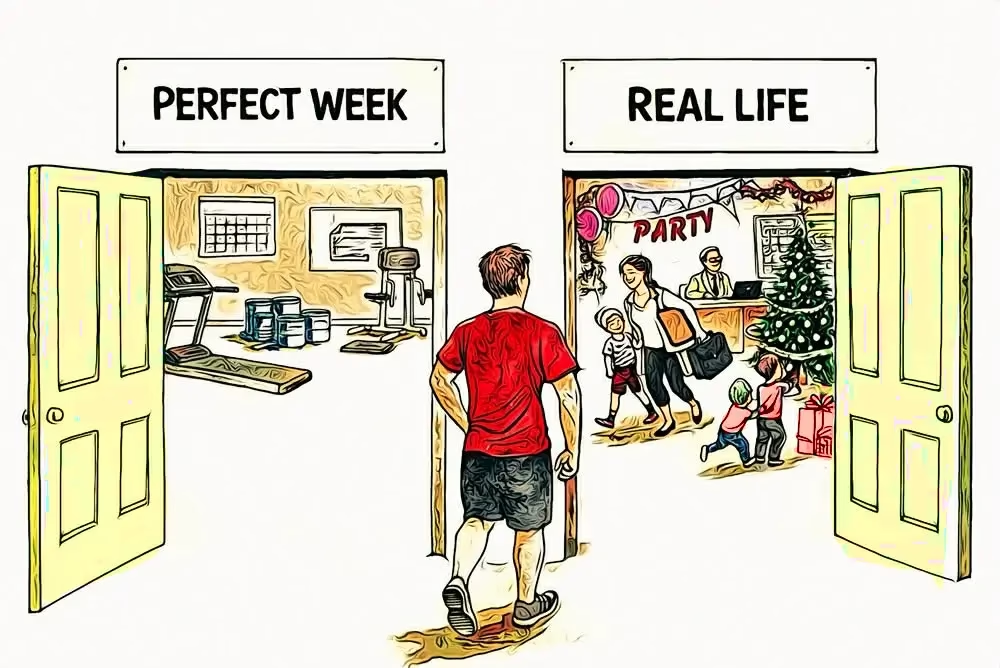
The real problem is that your plan only works when life is calm, predictable, and perfectly scheduled.
And life is never that.
Holidays show up.
Work runs late.
Kids get sick.
Travel happens.
Stress piles on.
Energy drops.
And when that happens, the plan you were following quietly collapses.
Not because you’re lazy.
Not because you “fell off.”
But because the plan was never designed for real life in the first place.
Most fitness plans are built for ideal conditions.
Perfect weeks.
Clear schedules.
High energy.
Unlimited time.
That’s fine in theory.
But it’s useless in practice.
When the first disruption hits, everything feels fragile. One missed workout turns into a missed week. One off-plan meal turns into “I’ll start over Monday.” Suddenly you’re back at square one, wondering why you can’t just stay consistent.
That’s not a character flaw.
It’s a systems problem.
People who stay consistent over years don’t have more discipline than you. They don’t wake up more motivated. They aren’t magically better at “staying on track.”
They simply have better strategies for messy moments.
They know what to do when time is tight.
They know how to eat when the schedule explodes.
They know how to adjust without quitting.
They know how to keep momentum without being perfect.
That’s the difference.
Consistency isn’t about intensity.
It’s about adaptability.
Real coaching isn’t handing someone a meal plan and a workout calendar and wishing them luck. Real coaching teaches you how to operate when things go sideways—because they always will.
It’s not just “here’s what to eat.”
It’s “here’s what to do when dinner plans change.”
It’s not just “train five days a week.”
It’s “here’s how to make two workouts still count when life gets busy.”
It’s not about rigid rules.
It’s about flexible structure.
A plan that only works when life is perfect isn’t a plan—it’s a trap.
A real plan meets you where you are on your worst weeks, not just your best ones. It accounts for stress, fatigue, travel, holidays, and unpredictable days. It gives you options instead of ultimatums. It helps you continue instead of restart.
That’s how progress actually happens.
Not in big dramatic bursts.
But in steady, imperfect motion.
If you’re tired of starting over…
If you’re tired of feeling like you “lose momentum” every time life gets busy…
If you want something that actually fits your life instead of fighting it…
Let’s fix the system.
Because when the system works, motivation stops being the issue—and consistency becomes the byproduct.